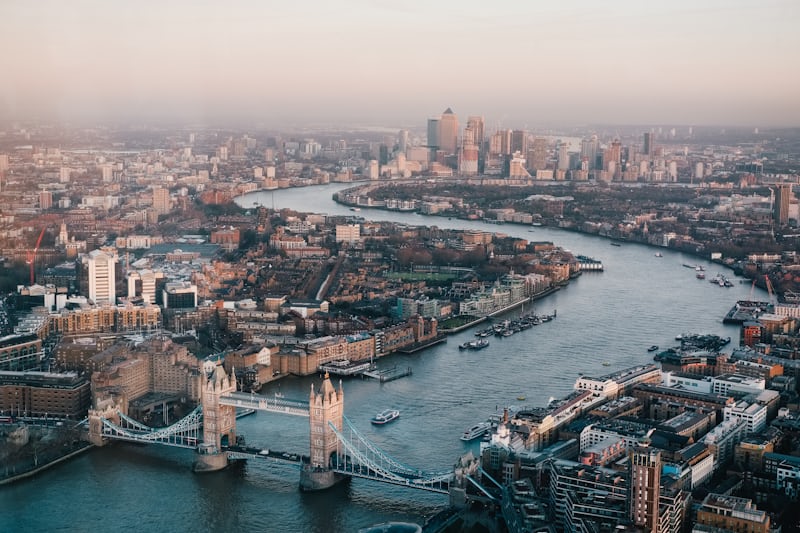
London is, by the standards of world cities, unusually good ground for wheelchair users — every licensed black cab is wheelchair accessible by regulation, and a parallel fleet of purpose-built private hire WAVs serves the journeys that need planning. This guide maps both systems, explains what to specify when booking, and makes the case that the best accessible journey is the one designed in advance rather than negotiated at the kerb.
Key takeaways
- The baseline: every London black cab is wheelchair accessible by design — ramps carried as standard
- The planned tier: pre-booked WAVs offer rear-ramp and higher-capacity configurations for powered chairs
- The specification habit: chair dimensions, transfer preference and companions — stated at booking
- Airport journeys: the vehicle is half the plan; coordinating terminal assistance is the other half
The two accessible fleets
London runs two overlapping systems. The hackney fleet is the famous one: accessibility is built into the black cab's licensing conditions, so every one carries a ramp and a wheelchair position — making London one of the few cities where a hailable accessible vehicle is the default, not the request. The second system is the pre-booked WAV: purpose-converted private hire vehicles with rear-entry ramps or lifts, higher door clearances and securement systems that accommodate larger powered chairs the taxi format can't. Knowing which fleet fits your chair and journey is the guide's first skill.
Specification is dignity
The difference between an adequate accessible journey and an excellent one is almost always information supplied at booking: the chair's type and dimensions (powered chairs especially — weight and turning space matter to securement), whether you travel seated in the chair or transfer to a vehicle seat, companions and their seating, and any equipment riding along. An operator with the full picture sends the right vehicle configured correctly the first time; an operator guessing sends hope. Specification isn't fuss — it's the mechanism by which the journey arrives already fitting you.
The airport run: two systems, one plan
An accessible airport journey has two halves that amateurs plan separately and professionals plan together: the vehicle to the terminal, and the airport's own assistance service from kerb to aircraft. The connection point between them — which entrance, which assistance desk, what time — is where journeys wobble, so a good accessible transfer plans the handover explicitly: set-down at the entrance nearest your terminal's assistance point, timing that respects the airport's requested assistance lead-times, and a driver briefed that the kerb isn't the finish line. Booked as one plan, the journey has no gaps to fall into.
Rights, ramps and the confidence to insist
Worth stating plainly: drivers of accessible vehicles are expected to deploy the equipment their vehicle carries and provide reasonable assistance, and wheelchair users should feel zero hesitation in expecting exactly that — the ramp exists to be used, not apologised over. Equally worth stating: the overwhelming majority of London's drivers deliver this without prompting and with practised ease. The guide's closing advice is confidence in both directions — specify fully, expect the standard, and let the system that was built for this journey do what it was built for.
Which Tube stations are step-free, and how do I plan a route?
A common question from wheelchair users and their companions is how much of the Tube they can actually use. About a third of Underground stations are step-free from street to platform: 95 of 272 by 2024. That still leaves many central stations with stairs only.
- Use the step-free Tube map and the step-free option in TfL's journey planner. It routes you only through accessible stations.
- Check "street to platform" vs "street to train". Some stations have a step or gap between platform and train. Manual ramps are available at some stations.
- Ask staff for help. They can help you board and arrange for someone to meet you at your destination.
- Check lift status on the day, as one broken lift can block a route.
- The Elizabeth line has step-free access at all its stations, making it the easiest rail link across the centre and to Heathrow.
- Buses are all low-floor with a ramp and a wheelchair space.
Every London black cab is wheelchair accessible, which is handy for short trips.
For airport transfers, if the passenger can move from a wheelchair to a car seat, a pre-booked MPV gives room for a folding chair and luggage, at a fixed fare agreed at booking.
Q: How many London Underground stations are step-free?
A: Just over a third. By 2024, 95 of the 272 Tube stations had step-free access from street to platform.
Q: Is the Elizabeth line wheelchair accessible?
A: Yes. Elizabeth line stations are step-free, which makes it the easiest rail route between Heathrow and central London for wheelchair users.
Planning a London trip as a wheelchair user
Visitors often ask which parts of London are genuinely accessible, and how to get around. The picture is mixed, but good planning goes a long way.
Getting around
- Black cabs. Every licensed London black cab has a ramp and space for a wheelchair, and most have a swivel seat.
- Buses. Every bus has a wheelchair space, and the driver can lower the bus and extend a ramp.
- Tube and rail. Only part of the Tube is step-free. TfL's step-free Tube guide shows the gap and step at each platform. The Elizabeth line is step-free throughout.
- Turn up and go. On the Tube, Overground and Elizabeth line, ask any staff member for help to board, with no need to book. Mini ramps are available at many step-free stations.
Sights and hotels
- Large museums such as the British Museum, the Natural History Museum and Tate Modern are largely step-free.
- Historic sites such as the Tower of London have some steps.
- Ask hotels to confirm accessible-room details, such as a roll-in shower, in writing.
Wheelchair hire. Several London companies hire wheelchairs and scooters. Book before you travel.
If you can transfer into a car seat, a pre-booked MPV from the airport has space for a folded chair. The fare is fixed at booking, and your flight is tracked.
Q: Are London black cabs wheelchair accessible?
A: Yes. Every licensed London black cab has a ramp and space for a wheelchair, and drivers deploy the ramp for you.
Q: Is the Elizabeth line step-free?
A: Yes, the Elizabeth line is step-free, which makes it a good option from Heathrow and across central London.
Questions readers ask
Are all London black cabs wheelchair accessible?
When do I need a pre-booked WAV instead of a black cab?
How should I book an accessible airport transfer?
Prefer certainty over roulette?
Specify once, travel properly — send your chair's details and journey, and the correctly configured WAV comes back as one fixed written quote.
More from the guide library
Events, venues, airports & the wider network
Rushxo runs fixed-price transfers to events and venues, every major airport and cruise terminal, and towns and cities right across London and the South East. Every journey is a fixed price agreed before you book.
Event & venue transfers
O2 Arena · Wembley Stadium · Twickenham Stadium · Emirates Stadium · Ascot Racecourse · Epsom Derby · Download Festival · Brands Hatch
Airports & cruise terminals
Gatwick Airport · Heathrow Airport · Stansted Airport · Luton Airport · London City Airport · Southend Airport · Cruise transfers
Popular towns & cities
London · Brighton · Canterbury · Chelmsford · Cambridge · Oxford · Guildford
Explore the network
Airport transfers · Events & venues · Event airport transfers