Get London Transfer Ltd is a TfL licensed private hire operator - London private hire operator licence number 11588. getlondontransfer.co.uk and rushxo.co.uk are trading names of Get London Transfer Ltd. Every booking made on these websites is operated by Get London Transfer Ltd.
London's public transport accessibility has improved enormously. It is also still patchier, gappier and more unpredictable than most visitors expect.
Updated 17 May 2026Reading time ~7 minCoverage England, Scotland & Wales
Mobility-aware travel · where the gap between the platform and the train decides the journey.
⚇ The Short Answer
Only about 30% of Tube stations have full step-free access. National Rail accessibility varies by station. Sunday engineering rail replacement buses are often not wheelchair-accessible. For elderly travellers, anyone using a mobility aid, post-operative patients and full-time wheelchair users, pre-booked transport with the right vehicle, the right driver, and the right time allowance is what makes London accessible rather than aspirational.
The Tube map shows step-free icons next to some stations. What it doesn't show is the gap between platform and train, the long underground corridors at major interchanges, the lifts that are out of service unannounced, or the way Transport for London's accessibility apps don't always sync with what's true on the day.
For elderly travellers, people recovering from surgery, anyone using a stick or a frame, and full wheelchair users, London public transport has improved markedly in the past decade — but it is not what most travellers from countries with universal step-free access would consider accessible.
Section 011. The gaps in ‘step-free’
Only ~30% of Tube stations have full step-free access from street to platform.
National Rail step-free coverage varies wildly by line and operator.
Bus accessibility is good in theory, but kneeling buses still have a gap between vehicle and pavement at most stops.
Heathrow Express is step-free; Paddington onward to your hotel often isn't.
The platform-to-train gap can be 15–25cm vertically and 10–30cm horizontally. Manageable for most. Impassable for some.
Section 022. The scenarios
01 · Hospital appointment
Outpatient appointment and home again
Day-case procedures, oncology appointments, post-operative follow-ups. The patient may be fine going in and noticeably tired coming out.
Public Transport
Tube to nearest station, walk to hospital, walk back, Tube home. Manageable for the journey out. Genuinely difficult for the journey back, especially with sedation or pain.
Pre-Booked Rushxo
Door-to-door pickup. Wheelchair-access vehicle on request. Driver waits during appointment if shorter than 2 hours. Coordinated discharge with ward staff.
Verdict. Hospital trips are one of the most reliably pre-booked categories. The return journey is what makes the difference.
Which Tube stations have long stair climbs?
Visitors travelling with older relatives often ask which stations to avoid on foot. Covent Garden and Russell Square are the famous examples. Both are deep stations with lifts but no escalators.
Covent Garden: the only stair route is a 193-step spiral staircase. Signs at the bottom tell you to use the lifts. There is also a short flight of stairs between the lifts and the platforms, so it is not step-free. Leicester Square is a short walk away and is often less crowded.
Russell Square: a 176-step spiral staircase and three lifts. If the lifts are busy or out of service, the stairs are a hard climb.
Practical tips for anyone with limited mobility:
Travel after the weekday morning rush, when lifts and escalators are less crowded.
Check lift status before you set off, and plan a backup station.
Use buses for short trips. You board at street level, and there are priority seats.
Many deep stations have long escalators. Stand on the right and hold the handrail.
For arrival and departure days with luggage, a pre-booked car is the better choice: door to door, no stairs, and a saloon, executive car or MPV at a fixed fare agreed at booking.
Q: How many steps are there at Covent Garden station?
A: The emergency spiral staircase has 193 steps. Use the lifts instead, or walk to nearby Leicester Square station.
A gentler London itinerary for seniors and limited mobility
A common question from older travellers is how to see London without long walks and endless stairs. Plan shorter days, sit down often, and choose your transport carefully.
Avoid stair-heavy stations. Covent Garden and Russell Square have long stair climbs if the lifts are busy. Use the TfL step-free guide to plan.
Use the bus as a tour. The top deck of an ordinary bus is a cheap way to see the sights sitting down. Routes through Westminster, the Strand and St Paul's pass many landmarks.
Take to the river. The Uber Boat between Westminster, the Tower and Greenwich has seats and views, with fewer stairs than the Tube.
Look for concessions. Some attractions offer senior prices. For example, Westminster Abbey charges £29 for over-65s, against £32 for adults.
Day
Plan
1
Westminster Abbey in the morning, lunch, then a river trip
2
British Museum (large and step-free) and a Bloomsbury lunch
3
An afternoon tea and a matinee in the West End
Book a hotel near a step-free station, or close to your main sights, to cut out daily walking.
For an airport transfer with limited mobility, a pre-booked car takes you door to door. 60 minutes' free waiting gives you time at baggage reclaim without rushing.
Q: Are there senior discounts at London attractions?
A: Some attractions offer them. Westminster Abbey charges £29 for adults aged 65 and over instead of £32.
Q: What is the easiest way to sightsee in London with limited mobility?
A: Use buses and Thames boats rather than deep Tube stations, plan one main sight a day, and stay near a step-free station.
02 · Visiting family
Train station to relative's home visit
An 82-year-old grandmother travelling from Manchester to visit family in Surrey. National Rail to Euston is fine. Euston to a residential street in Cobham with a suitcase is not.
Public Transport
Euston → Tube/bus to Waterloo → SWR to Cobham → taxi rank with no priority for elderly passengers → suitcase from rank to door.
Pre-Booked Rushxo
Pre-booked meet at Euston with a name card, drive direct to door. ~75 min single journey.
Verdict. Families travelling to support elderly relatives book this category constantly. The peace-of-mind value alone exceeds the fare.
03 · Wheelchair access
Full wheelchair user, multi-day London visit
Tourists who use wheelchairs full-time face genuine planning challenges in London. Not every Tube line, not every station, not every hotel entrance.
Public Transport
Step-free Tube journey planning is possible but tight. Bus routes work better. Rail replacement bus services on Sundays generally don't have wheelchair access at all.
Pre-Booked Rushxo
Wheelchair-access vehicles (rear-loading ramp, full restraint system) available with 24h notice. Driver trained in transfers and tie-down.
Verdict. Pre-booked accessible transport is what makes London tourism actually possible rather than aspirational for full-time wheelchair users.
04 · Airport with mobility aid
Heathrow with a walking frame
Frequent traveller, late 70s, three trips a year to see family in Australia. Walks short distances with a frame. Cannot manage stairs or the gap between Tube and platform.
Public Transport
Airport assistance is excellent within the airport. Once outside the terminal, the public transport journey is on you and your frame.
Pre-Booked Rushxo
Driver meets at arrivals with airport assistance handover. Bags and frame go in the boot. Door-to-door, no transfers.
Verdict. Airport assistance teams are professional and helpful. They end at the terminal door. From there, pre-booked is the natural continuation.
Section 033. What we offer (and what we don't)
What we offer:
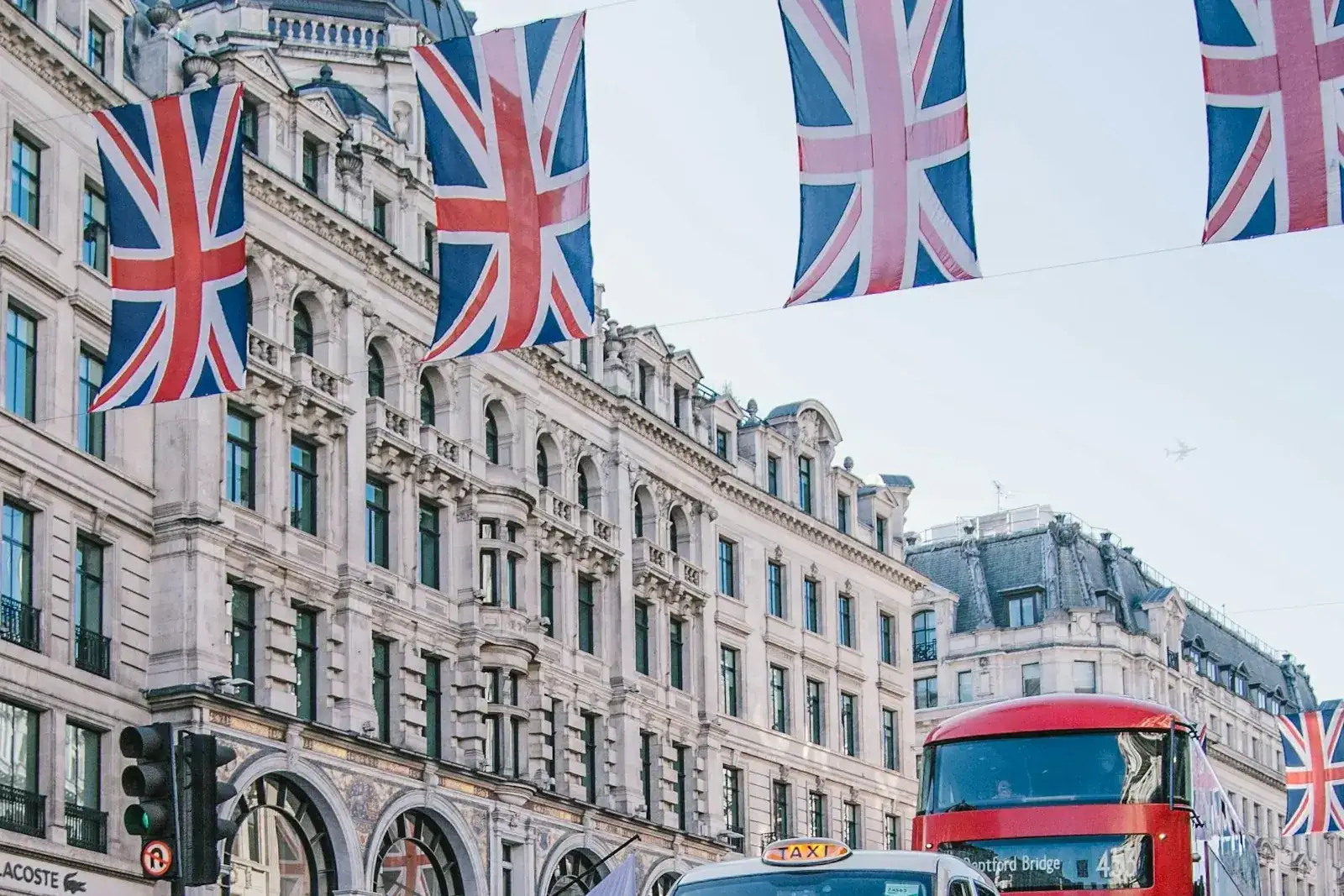
Busy London street with traffic
Wheelchair-access vehicles (24h advance notice)
Drivers trained in mobility-aid handling
Extra time built into bookings (no rushed pickups)
Companion-friendly bookings — relative or carer travels free
Recurring booking for treatment courses with the same driver where possible
What we don't offer:
Clinical or paramedic transport (ambulance services)
Stretcher transfers
Drivers who are medical staff
For non-emergency, scheduled journeys involving reduced mobility, pre-booked private hire is what most patients, carers and families end up using. It's the considered option, not the luxury option.
⚇ The Rushxo Promise
The vehicle that matches the passenger. Every time.
Pre-booked accessible transfers across London and the home counties. Wheelchair-access vehicles, mobility-aid handling, extra time built in, companion-friendly bookings. Specify the requirements when you book — we confirm the right vehicle and driver in writing.
Why there's no direct train between Heathrow and Gatwick, and the smart fix.
Everywhere on Rushxo — one click away
Closest airport to Elderly, Disabled & Reduced-Mobility Travel in London: Pre-Booked Accessible
London City Airport is the closest airport to Elderly, Disabled & Reduced-Mobility Travel in London: Pre-Booked Accessible, roughly 11 road miles and about 31 minutes by car outside the peaks. For most scheduled international flights the best airport for Elderly, Disabled & Reduced-Mobility Travel in London: Pre-Booked Accessible is Gatwick Airport, about 35 miles and 71 minutes away, with far more routes and airlines; Stansted Airport is the next option at around 37 miles.
Elderly Disabled Mobility London Private: events, venues, airports & the wider network
Rushxo runs fixed-price transfers from Elderly Disabled Mobility London Private to events and venues, every major airport and cruise terminal, and towns and cities right across London and the South East. Every journey is a fixed price agreed before you book.