Get London Transfer Ltd is a TfL licensed private hire operator - London private hire operator licence number 11588. getlondontransfer.co.uk and rushxo.co.uk are trading names of Get London Transfer Ltd. Every booking made on these websites is operated by Get London Transfer Ltd.
Consultation Status: The UK Government consultation on mandatory eye tests for drivers 70+ closed on 11 May 2026. The Department for Transport is reviewing responses with no final decision announced yet.
Current System: Drivers aged 70+ currently renew their licence every 3 years using a self-declaration form. No mandatory eye test is currently required by law.
Eye Tests Free: NHS eye tests are available free to all UK residents aged 60+ (typically every two years).
Age ≠ Unsafe Driving: Drivers aged 17–29 have higher fatality rates than drivers over 70 (Department for Transport, 2024).
Multiple Transport Options: Public transport, community services, private hire and family support provide viable alternatives with different cost, flexibility and convenience profiles.
Introduction: The Conversation About Driving and Independence
If you've recently seen headlines about mandatory eye tests for drivers aged 70+, you're not alone in wondering what this means for you or your loved ones. The UK government's consultation on this topic—which closed in May 2026—has sparked important conversations across the country about driving safety, independence, and the transport choices available to older adults.
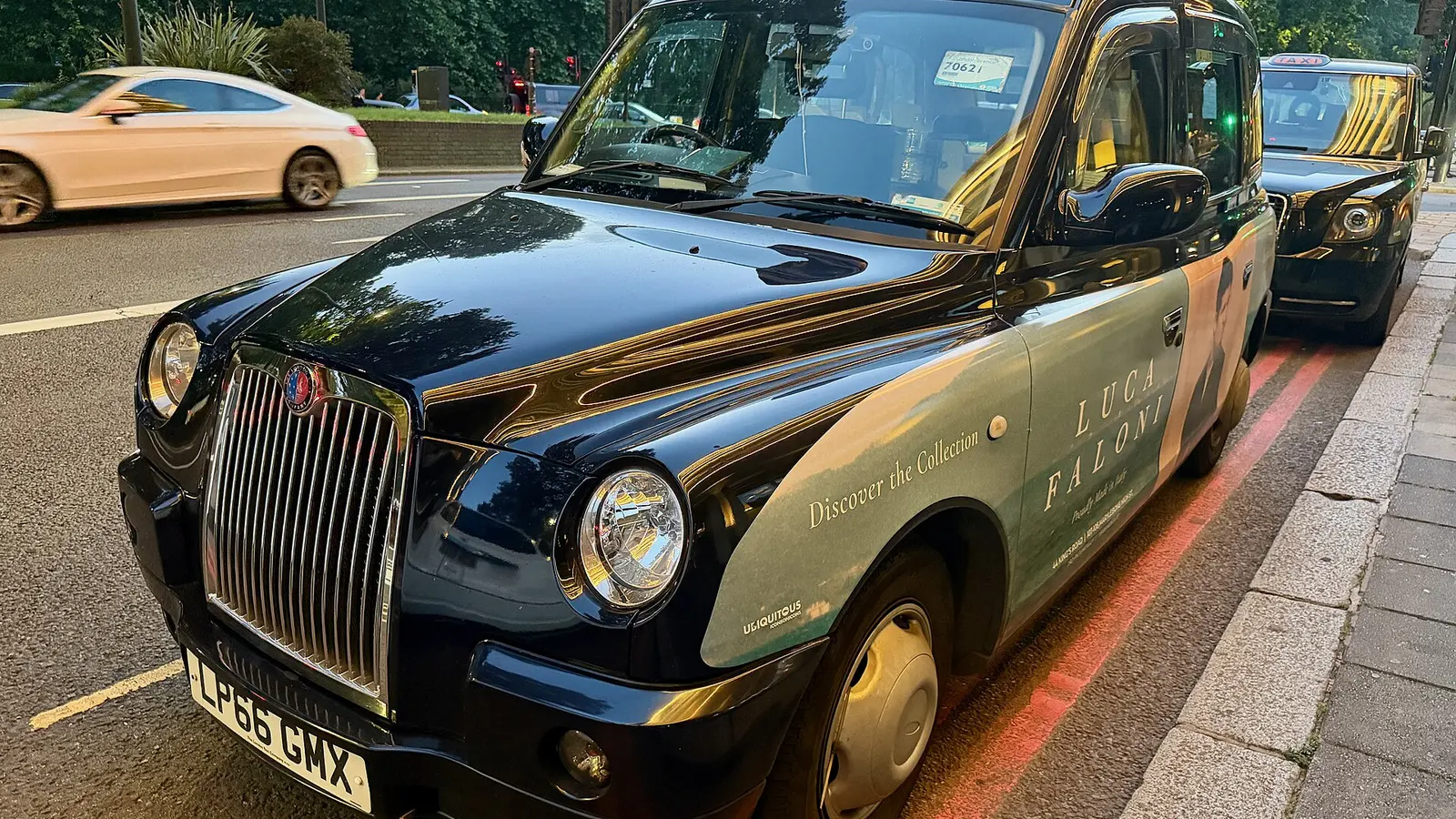
London taxi · Photo: Oleg Yunakov, CC BY-SA 4.0 via Wikimedia Commons
This comprehensive guide combines news analysis, practical research and personal considerations to help you think through your options. Unlike superficial advice, we'll examine real costs, address emotional concerns about independence, compare transport methods objectively, and provide location-specific guidance. The goal is to help you make informed decisions based on your circumstances, not assumptions about age.
The key message: this is about informed choice. Your choice about how you want to travel, how you want to spend your time, and how you want to maintain your independence.
What's Changing for Drivers Over 70 in the UK?
In January 2026, the UK Government launched a public consultation as part of its new Road Safety Strategy, which aimed to reduce deaths and serious injuries on British roads. One of the key proposals was the introduction of mandatory eyesight tests for drivers aged 70+ at licence renewal.
Let's be absolutely clear about the current status and factual timeline:
Launched: 7 January 2026 as part of the Government's Road Safety Strategy
Closed: 11 May 2026 (12-week consultation period)
Current status: The Department for Transport is reviewing consultation responses
Final decision: Not yet announced
Current legal requirement: NO mandatory eye test yet—self-declaration form remains current law
According to the Department for Transport's 2026 Road Safety Strategy consultation, the proposals aim to reduce deaths and serious injuries. However, the consultation also raised important questions about whether testing should apply to all age groups, since vision problems can develop at any age regardless of driving experience.
"The consultation feedback received from optometrists, driving organisations and the public will inform final policy decisions. The government is considering evidence on the effectiveness of mandatory testing in improving road safety outcomes." — Department for Transport, Road Safety Strategy Review (2026)
What Are the Current Driving Licence Rules for Over-70s?
To understand why change is being discussed, it helps to know how the current system works and what evidence supports it.
The Current Process
Right now, if you're 70 or older:
Your driving licence expires at age 70
You must renew your licence every three years thereafter
At renewal, you complete a self-declaration form confirming you meet DVLA eyesight standards
You must disclose any medical conditions that could affect driving
You do not currently need to provide evidence of an eye test
Eye tests for over-60s are free on the NHS (available every two years)
The current system trusts drivers to self-assess their fitness to drive. However, the consultation proposes adding a verification step through mandatory optician-administered testing.
Important: This self-declaration system remains the current law as of July 2026. If you're renewing your licence now, you'll use the existing process. Keep checking the Government's official channels for updates on the consultation outcome.
Why Are Mandatory Eye Tests Being Discussed?
Vision, Safety and the Evidence Base
The case for mandatory testing is based on several evidence-based factors, though the picture is more nuanced than simple age-based assumptions:
Vision and Safe Driving: According to the Association of Optometrists and Royal College of Optometrists, eyesight is critical to safe driving. Good vision enables spotting hazards, reading road signs, judging distances, and quick reactions. Certain eye conditions—including cataracts, age-related macular degeneration, and glaucoma—are more prevalent in older age groups.
Research and Data: The 2026 consultation cited research showing:
Seven in 10 UK adults support mandatory eye tests for drivers at renewal (Association of Optometrists survey, 2025)
Approximately 2.3 million UK licence holders are aged 70 or older (DVLA data, 2026)
In 2024, approximately 24% of car drivers killed in collisions were aged 70 or older (Department for Transport, 2025)
International Practice: The UK is one of only three developed nations relying purely on self-reporting at licence renewal. Many other countries require periodic vision or driving assessments.
The Broader Context—Age Is Not the Issue
Critical perspective: Department for Transport data (2024) shows drivers aged 17–29 account for 294 male fatalities compared to 224 for drivers over 70. The consultation emphasises vision standards, not age discrimination. What matters is whether individual eyesight meets required standards—regardless of age. The proposed change addresses vision verification, not age-based driving restrictions.
Does Turning 70 Automatically Mean You Should Stop Driving?
Absolutely not. This is crucial to understand.
Reaching 70 does not mean your licence should be revoked, your driving abilities diminish, or that you become unsafe. Many drivers aged 70+ continue driving safely and confidently into their 80s and 90s, and that is entirely valid.
The Evidence on Older Drivers
Research by the Road Safety Analysis (2025) found that older drivers often show:
Lower average annual mileage (less exposure to high-risk situations)
Preference for familiar routes (reduced navigation stress)
Higher use of defensive driving techniques
Greater awareness of personal limitations
The conversation about mandatory eye tests is not about removing licences from all older drivers. It's specifically about ensuring that anyone who drives—regardless of age—has vision meeting required standards. If your eyesight is good (with or without glasses), you can continue driving safely.
Why Some Older Adults Choose to Drive Less—or Stop Driving
Many people in their 70s, 80s and beyond genuinely do choose to reduce driving or stop. This is a valid personal choice deserving respect. Understanding why helps you think through what's right for you.
Common reasons for reducing or stopping driving:
Night Driving Concerns
Many people find night driving more stressful with age. Glare from headlights, reduced contrast and difficulty in low light can make evening journeys uncomfortable, even if vision technically meets standards. Preferring not to drive at night is reasonable and doesn't require stopping daytime driving.
Health and Medical Factors
Conditions like arthritis, stiffness, reduced flexibility or medications can make driving less comfortable. Some find concentration or reaction time feels less sharp, even if medically acceptable. Your subjective experience of comfort and confidence matters.
Cognitive Load and Mental Fatigue
Heavy traffic, motorway driving or unfamiliar routes require sustained mental concentration that some people prefer to avoid. This isn't inability—it's choosing not to use mental energy that way.
Financial Considerations
Car ownership costs escalate significantly for drivers over 70. Insurance premiums increase substantially, and maintenance, MOT, fuel and parking add up. If you're not driving daily, alternative transport might cost less overall (see Cost Analysis section below).
Environmental and Values-Based Choices
A growing number of older adults actively choose lower-carbon transport as part of their commitment to sustainability.
The Freedom Paradox
Many people who stop driving report feeling more free, not less. No concentration required. No traffic stress. Time to relax, read, or simply enjoy a conversation instead of focusing on the road. This is genuine freedom experienced differently.
Comparing Transport Options: Cost, Convenience and Independence
Different transport methods suit different needs, budgets and lifestyles. Here's how they compare across key factors:
Factor
Driving Your Own Car
Private Hire/Taxis
Public Transport
Family/Friends
Door-to-Door?
Yes—exact pickup/dropoff
Yes—exact pickup/dropoff
No—walk to/from stops
Yes (if available)
Advance Booking?
Must plan yourself
Yes—days/weeks ahead
No—follows fixed schedule
Depends on family
Predictable Cost?
Variable (fuel, insurance, maintenance)
Fixed fares—no surge pricing (RushXO)
Affordable—concessionary fares available
No cost (but obligation)
Flexibility?
High—any time, any route
High—booked to your schedule
Low—follows timetables
Varies—depends on family
Luggage Help?
No—handle yourself
Yes—driver assists
No—carry yourself
Yes (usually)
Mental Load?
High—navigation, concentration, responsibility
None—professional driver handles all
Low—follow signage
Low—but social negotiation
Independence?
Maximum—complete control
High—choose when/where, no coordination needed
High—travel independently
Lower—depends on availability
Good For Regular Journeys?
Yes—but cost increases
Yes—can set up recurring bookings
Yes—if route/timing matches
No—too demanding
Key Takeaway: No single option is "best"—it depends on your journey needs, budget, health, and personal preferences. Most older adults use a combination (e.g., public transport for familiar routes, taxis for appointments, family support for occasional outings).
Real-World Scenarios: How Different Transport Options Work in Practice
Here's how different transport methods work for common journeys older adults make:
Driving yourself: Navigate unfamiliar hospital, find parking, walk from car park, manage stress if you're already worried about appointment. Total time: 45-60 minutes for a nearby hospital.
Private hire taxi: Driver knows hospital entrance, drops you at door, waits if appointment runs late, no navigation stress. Total time: 25-35 minutes. Cost: Fixed fare (no hourly meter anxiety).
Public transport: Bus/train to stop near hospital, walk from stop, follow signage. Works if route/timing aligns. Total time: 45-90 minutes depending on connections. Cost: Very affordable (often free with concessions).
Family: Convenient but requires coordinating their schedule. Repeated trips become burdensome for them.
Practical winner: Private hire for medical appointments if cost allows; public transport for regular appointments on established routes.
Scenario 2: Airport Transfer (Time-Sensitive Journey)
Driving yourself: Navigate to airport, find parking (£5-15/day at most airports), walk from car park, rush through security. Stress about missing flight. Total cost: £10-20+ plus fuel.
Private hire taxi: Driver tracks flight, picks up on time, knows airport layout, drops at terminal door. No parking worry. Total time: Direct journey. Cost: Fixed fare including drop-off charge.
Public transport: Train or bus to airport. Frequent and affordable but requires advance research. Works if comfortable with luggage on public transport.
Family: Generous but often requires significant time commitment from them.
Practical winner: Private hire for reliability and stress reduction, especially for early flights; public transport if route/timing suits your confidence.
Scenario 3: Weekly Shopping
Driving yourself: Drive to supermarket, park, shop, carry bags to car. Familiar routine. Total time: 90 minutes. Cost: Fuel only.
Private hire taxi: Book recurring journey each week, driver waits, assists with bags. Eliminates car park navigation. Total time: Same or less. Cost: Recurring bookings often have better rates.
Public transport: Bus to shopping centre, walk around, carry bags back. Works well if stop is convenient. Total time: 2 hours typically. Cost: Low (often free with age concessions).
Practical winner: For most, a mix works best—online delivery for heavy items, occasional taxi/public transport for choice shopping.
Scenario 4: Evening Social Activity (Theatre/Dinner)
Driving yourself: Plan route, navigate city centre, find parking, concentrate on driving home tired. Many older adults avoid night driving for safety/comfort reasons.
Private hire taxi: Book return journey, enjoy the event without worrying about driving tired, professional driver handles navigation. Guarantees safe journey home.
Public transport: Evening buses/trains available in cities. Cost-effective. Independence maintained. Works well in urban areas.
Family: Could arrange pickup, but asking repeatedly becomes awkward.
Practical winner: Private hire for peace of mind and safety; public transport in urban areas if confident with late-evening transport.
Addressing Emotional Barriers: Independence, Dependence and Change
The practical logistics of transport are just part of the equation. Emotional factors often matter more. Here are common concerns—and realistic perspectives on them:
"If I stop driving, I'll lose my independence."
Reality: Independence is often experienced more fully without driving. You can:
Visit family and friends without navigating unfamiliar routes
Attend medical appointments without parking and navigation stress
Enjoy social activities without the fatigue of concentrating on the road home
Take spontaneous trips by booking transport rather than planning your own route
Independence isn't about doing everything yourself—it's about maintaining your lifestyle and making your own choices. Professional transport is a tool that supports independence, not diminishes it.
"I don't want to become dependent on my family."
Reality: Professional transport services specifically prevent family burden. Regular family support for transport is straining for adult children who have their own commitments. Professional services:
Remove the need to ask family for repeated favours
Maintain clearer boundaries and healthier family relationships
Provide reliable backup when family support isn't available
Allow family visits to be social occasions, not transport logistics
Using professional services actually supports family relationships by not overloading them with transport coordination.
"I feel uncomfortable using taxis—I'm not sure how it works."
Reality: Modern private hire services have simplified the process significantly. Booking a taxi involves:
One phone call to confirm details and receive confirmation with driver info
Driver arrives at your home (no negotiating location or curb pickup)
Professional assistance with luggage if needed
Clear pricing confirmed before journey
The initial discomfort usually disappears after the first journey. Many older passengers find professional taxi services easier and less stressful than public transport navigation.
"What if using a taxi feels like admitting defeat?"
Reality: Choosing a professional service based on your preferences is the opposite of defeat—it's wisdom. You're making an informed choice about how to spend your time and energy. Athletes retire from sports when it no longer suits their life. Drivers switch to other transport for similar reasons. It's strategic choice-making, not failure.
"I'm worried about safety with unfamiliar drivers."
Reality: Reputable private hire services (licensed, vetted drivers, traceable journeys) are actually safer than informal arrangements. Professional services:
Require driver background checks
Maintain records of every journey
Have insurance covering passengers
Provide driver information in advance
Have customer support if issues arise
Professional services offer greater safety accountability than informal arrangements.
"What if I change my mind later?"
Reality: This doesn't have to be permanent. Many older adults:
Stop driving for a period, then resume when circumstances change
Drive less frequently (e.g., only daytime in familiar areas)
Use professional services for specific journeys while continuing to drive others
Reassess annually based on how they're feeling
Transport choices are flexible and personal. You can adjust at any time based on your changing circumstances and preferences.
Cost Analysis: Car Ownership vs. Alternatives
One of the most important (and often unaddressed) factors is actual cost. Here's how different options compare:
Annual Cost of Car Ownership (UK Data)
According to the RAC Motoring Services (2025), the annual cost of running a small/medium car includes:
Insurance: For drivers 70+, insurance typically costs £400-800+ annually (significantly higher than younger drivers). Some insurers charge substantial premiums for over-70s. Source: RAC Breakdown Cover Cost Guide, 2025
Fuel: Approximately £1,200-1,800 annually depending on mileage and fuel efficiency (based on £1.40-1.60 per litre at 2026 prices and 10,000-15,000 miles/year typical for older drivers). Calculation based on Department for Transport traffic statistics
Maintenance & MOT: Approximately £400-700 annually for servicing, replacement parts and annual MOT (increases with vehicle age). Source: Which? Motoring Cost Guide 2025
Parking: If you have a private drive: £0. If you park on-street or in paid parking regularly: £100-300+ annually depending on location. Varies significantly by location
Breakdown Cover (recommended): £100-200 annually for peace of mind. Optional but recommended for older drivers
Estimated Total Annual Car Ownership Cost: £2,200-3,700+ (excluding vehicle depreciation)
Annual Cost of Alternative Transport
Private Hire Taxis (Regular Use): If using taxi twice weekly for typical journeys (hospital, shopping, social): approximately £30-50 per journey × 100 journeys annually = £3,000-5,000. However, many services offer recurring booking discounts (typically 10-20% reduction), bringing costs to £2,400-4,000. Illustrative example—actual costs depend on journey distance and location
Public Transport (Urban): Concessionary travel passes for over-60s often cost £0-50 annually (many councils offer free or heavily discounted passes). Cost: approximately £50-200 annually. Varies significantly by local authority. Check your council website.
Public Transport + Occasional Taxis: Use buses/trains for regular familiar routes (low cost with concessions), private hire for appointments/special journeys: approximately £500-1,000 annually. Hybrid approach used by many older adults
The Break-Even Point
If you currently drive but use your car less than 8,000 miles annually (many older adults), alternative transport often costs significantly less when you factor in insurance, maintenance and fuel. The break-even point varies by location, driving habits and which alternatives you use, but the financial case for reducing driving is often stronger than people assume.
For accurate costs in your area, check:
RAC or AA annual motoring cost calculators
Your local council website for public transport concessions
Get quotes from local private hire services for realistic journey costs
Comfortable saloon car parked on a city street
Regional Guidance: Transport Options Vary by Location
The viability of different transport options varies significantly by region. Here's realistic guidance:
London and Major Urban Centres (London, Manchester, Birmingham, Edinburgh, Cardiff)
Advantages: Excellent public transport (Underground, buses, trams), competitive private hire services, frequent taxis. Age-related concessionary travel often free or £1-2 per journey.
Best Options: Public transport for regular familiar routes, private hire for appointments and time-sensitive journeys, family support as backup.
Reality Check: If confident navigating public transport and journeys follow established routes, you might need minimal taxi services. If mobility challenges or anxiety about public transport exist, private hire becomes more valuable.
Suburban Areas (Greater London, suburbs of major cities)
Advantages: Good public transport connections, multiple private hire operators, some community transport services.
Challenges: Less frequent late-night services, longer journey times on public transport, may require connections.
Best Options: Mix of public transport for daytime journeys, private hire for evening/time-sensitive trips, regular visits or medical appointments.
Reality Check: Suburban older adults often find the combination approach most practical—public transport for shopping and appointments when timing suits, taxis for flexibility.
Market Towns and Smaller Cities (50,000-200,000 population)
Advantages: Many have local buses and limited taxi services, walkable town centres, strong community transport schemes (check local council).
Challenges: Less frequent public transport, smaller taxi market (may need to book ahead), limited evening/weekend services.
Best Options: Local taxi service (RushXO and others operate in expanding regions), community transport schemes, family support.
Reality Check: Investigate what your local council offers—many smaller towns have excellent community transport specifically for older people. Cost is often subsidised locally.
Rural Areas
Advantages: Driving remains most practical for many journeys, lower car insurance cost in some areas, family support more common (tighter communities).
Challenges: Minimal public transport, taxi services sparse (must book ahead, higher costs), isolation if driving stops.
Best Options: Continue driving if safe and possible, community transport schemes (essential to investigate), private hire for specific journeys (book ahead), family support network, consider relocating nearer town if driving becomes unsafe.
Reality Check: Rural older adults should investigate local council-run community transport schemes specifically—these exist for this reason and are often subsidised. Organizations like Community Transport Trust can identify services: www.communitytransport.org.uk
Questions Older Drivers and Their Families Are Asking
Q: Do drivers over 70 currently need a mandatory eye test to renew their licence?
A: No. As of July 2026, the current system requires a self-declaration form, not an actual eye test. However, you should take advantage of free NHS eye tests available to over-60s every two years to monitor your vision independently. For NHS eye tests, visit NHS.uk
Q: What happens when you renew your driving licence after 70?
A: You'll fill in a renewal form (available online from DVLA or by post) and make a legal declaration that you meet eyesight standards and don't have medical conditions affecting driving ability. Send it to DVLA, and if approved, your licence is renewed for another three years. Processing typically takes 1-2 weeks. Full instructions at GOV.UK: Renewing your licence at 70
Q: Has the proposed eye test requirement become law?
A: No. As of July 2026, the proposed mandatory eye test is a proposal under government review. The consultation closed in May 2026. No final decision has been announced. If you're renewing your licence now, you'll use the current self-declaration process.
Q: When will the Government announce its decision?
A: The Department for Transport hasn't published a specific timeline. They're reviewing consultation responses from multiple stakeholders. An announcement could come within several months or could take longer. For updates, check Department for Transport website regularly.
Q: What happens if my eyesight no longer meets the required standard?
A: If an eye test shows your vision doesn't meet DVLA standards, your optician will advise you. Most vision problems can be corrected with glasses or contact lenses, allowing you to reapply. The DVLA doesn't immediately revoke licences—they work with you to find solutions. Contact DVLA if unsure: +44 300 790 6801 or www.dvla.gov.uk
Q: Can I choose to stop driving after 70?
A: Absolutely. You can choose not to renew your licence at any point. Simply don't submit the renewal form when due. There's no legal obligation to keep driving, and DVLA won't chase you to renew. You can stop at any age.
Q: What's the best alternative to driving for my situation?
A: This depends entirely on your location, budget, journey types and health. Most people use a combination: public transport for familiar regular routes (especially with concessionary fares), private hire for time-sensitive or unfamiliar journeys, community transport for accessibility needs, family support as backup. See the Transport Comparison table and Regional Guidance sections above for detailed guidance for your situation.
Q: Can older passengers book taxis in advance?
A: Yes. Reputable private hire services like RushXO allow booking days or weeks ahead. You'll know your pickup time and fare upfront, which is perfect for regular appointments or planned outings. Advance booking also often qualifies for better rates.
Q: How do I know if a private hire service is legitimate and safe?
A: Legitimate private hire services must be licensed locally and should provide: clear driver details in advance, traceable journey records, professional insurance, background-checked drivers, established customer service. If booking, verify the service has a transparent booking process and proper licensing. RushXO, for example, provides driver information and tracking for all journeys.
Q: Can family members arrange transport for an older relative?
A: Yes. Adult children and family members can book private hire services on behalf of older relatives. Simply call the service to discuss arrangements. However, consider whether frequently asking family for transport is sustainable—professional services remove this burden from family relationships.
Q: How much does it cost to use a taxi service regularly for medical appointments?
A: Costs vary by location and journey distance. For illustrative purposes, if you have weekly medical appointments requiring a 20-30 minute journey each way, costs might range from £30-60 per return journey depending on your area. Many services offer recurring booking discounts (10-20%). However, you may save money overall when compared to car ownership costs (see Cost Analysis section). Get quotes from services in your area for accurate pricing.
Sources & Further Reading: Evidence-Based Resources
Official Government Sources
GOV.UK: Renewing your driving licence when you're 70 or over — www.gov.uk/renew-driving-licence-aged-70 (Official DVLA guidance on current renewal process)
RAC Foundation: Older Drivers on the Road — www.racfoundation.org (Independent research on older driver safety and statistics)
Public Transport and Community Services
Your Local Council: Community Transport Services — Search "[your council name] community transport" or check your council website (Local authority-specific support for transport)
Which?: Motoring Costs — www.which.co.uk (Independent cost analysis and guides)
Age UK and Support Organisations
Age UK: Transport and Getting Around — www.ageuk.org.uk (Practical advice and support for older people)
Professional Transport for Older Passengers Across the UK
If you've decided that professional private hire could help with your specific journeys, RushXO offers fixed-price transport designed with older passengers in mind. We handle everything from hospital appointments to airport transfers to shopping trips—with fixed fares, professional drivers and door-to-door service.
RushXO is one option among many. This guide discusses public transport, community services and family support as equally valid alternatives. However, if you'd like to explore professional private hire, we're here to help.
Rushxo runs fixed-price transfers to events and venues, every major airport and cruise terminal, and towns and cities right across London and the South East. Every journey is a fixed price agreed before you book.