Snow, Fog and Storms
Different weather breaks different parts of the journey. Fog attacks the airport, snow attacks the road, and storms move your arrival airport entirely. The plan is not the same for each.
Weather does not delay a transfer, it delays one specific part of it
An airport transfer is really two linked systems: a road journey and an air operation. Bad weather almost never degrades both equally, and knowing which one is under pressure tells you exactly what to change.
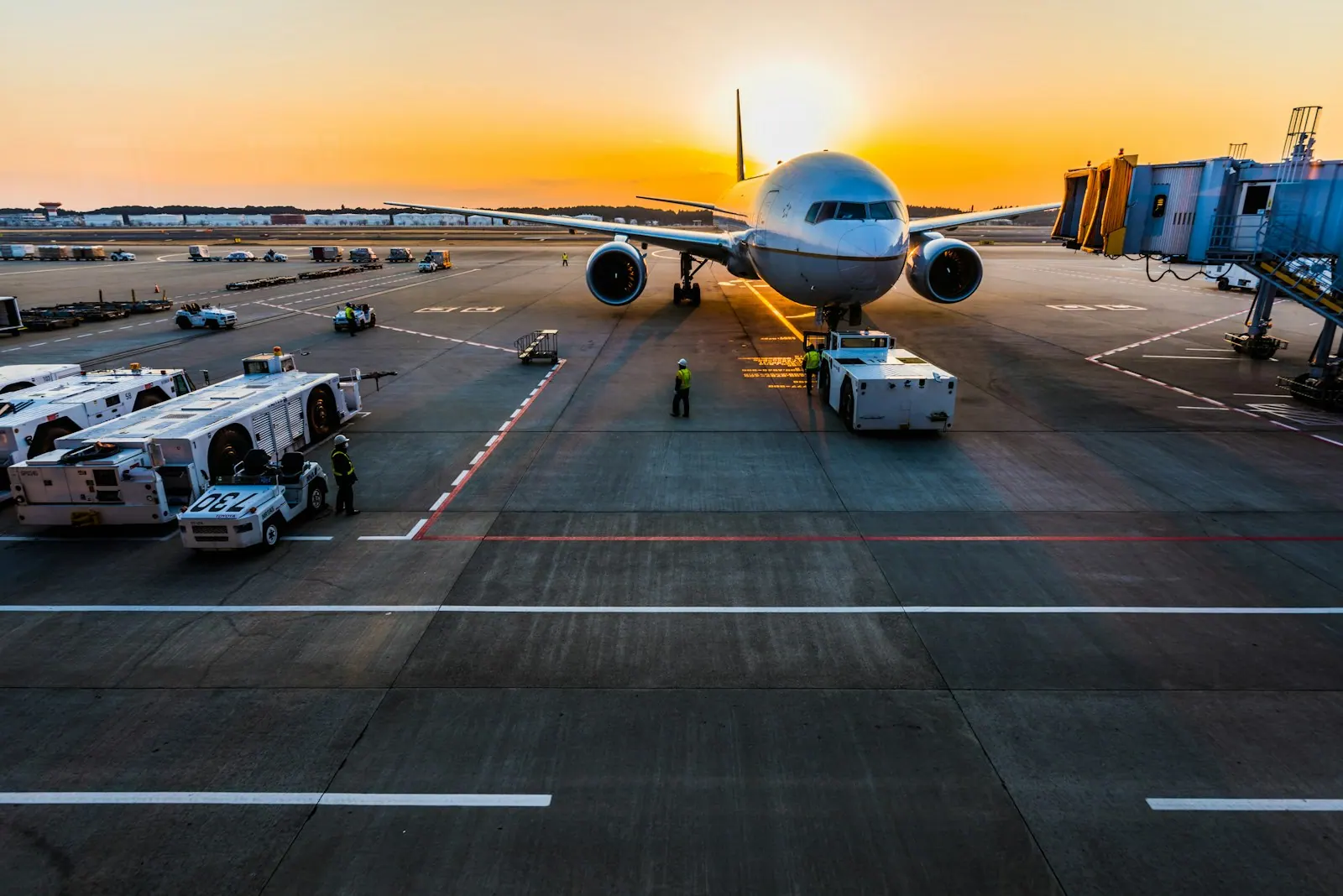
Fog is the clearest example. Dense fog barely affects driving speeds on a motorway, but it forces air traffic control to increase separation between aircraft, which reduces the number of movements per hour. The runway does not close, it simply runs slower, and the effect stacks through the day. In fog your road plan is fine and your flight time is not.
Snow inverts this. Aircraft operate in snow routinely, provided de-icing capacity holds up, but roads become genuinely slower and less predictable, particularly on residential streets that are not on a gritting priority route. In snow your flight may well be roughly on time while your journey to it has quietly become ninety minutes longer.
Storms are the awkward third case, because they can change the destination. Sustained crosswinds or severe gusts can lead to holding, and holding aircraft that run low on options get diverted, sometimes to a completely different airport. That is not a delay you manage with extra minutes. It is one you manage by confirming where the aircraft actually landed before anyone starts driving.
What each weather type actually does
Indicative planning guidance. Conditions vary and airport and airline decisions always take precedence.
| Condition | Mainly affects | Typical impact | What to do |
|---|---|---|---|
| Dense fog | Flight flow rates | Flights delayed, effects stack through the day | Track the flight, keep pickup flexible |
| Heavy snow | Roads and de-icing | Road times up by half or more | Depart 60-90 min earlier than usual |
| Ice or freezing rain | Untreated side streets | Road times up by a third | Meet the car on a treated main road |
| Named storm, high winds | Landings and diversions | Holding, diversions, cancellations | Confirm the arrival airport before travelling |
| Heavy rain | Road speed, surface water | Road times up by a quarter | Add 30 minutes and book in advance |
| Heatwave | Rail speed restrictions | Road demand rises sharply | Book early, rail crowds push onto roads |
The disruption plan that works in every condition
Five moves, in order of how much time they save.
Find out which system is degraded before you change anything
Check the airport departures or arrivals feed and a live traffic map. If flights are slipping and roads are normal, do not leave earlier, that just means longer in a terminal. If roads are slipping and flights are fine, leave much earlier.
Give the operator your flight number, not just a time
A tracked flight number lets a pickup move automatically with the aircraft. A fixed clock time in disrupted weather is a booking that will be wrong, in one direction or the other, by a wide margin.
Move your pickup point to a road that gets treated
In snow and ice this is the single most effective change you can make. A car that cannot safely climb an untreated residential hill is not a service failure, it is physics. Walking two hundred metres to a main road solves it.
Agree what happens if the flight diverts
Ask before the day. A diversion to another airport is a different journey with a different price, and it is far better to have that established in advance than negotiated at midnight in an arrivals hall.
Keep a fallback that does not depend on a forecourt
If conditions are severe, terminal forecourts and short-stay car parks become congested and slow. Knowing an alternative meeting point, one level up or one road out, is worth more than any amount of extra departure buffer.
What a good operator should be doing in bad weather
Reasonable expectations, so you know whether you are being looked after.
Tracking your flight, not your booking time
Arrival pickups should follow the actual aircraft. If a flight lands ninety minutes late in fog, the car should arrive ninety minutes later, without you having to phone and rearrange it from baggage reclaim.
Holding the price you were quoted
Weather is exactly the moment when demand pricing punishes people who have no alternative. A fixed fare quoted in advance should not move because a forecast changed, and ours does not.
Answering the phone with a human
Automated systems handle normal days well and disrupted days badly. Disruption produces situations that need a decision, and a decision needs somebody with authority to make it.
Telling you honestly when driving is the wrong answer
In genuinely severe conditions, the right advice is sometimes to delay, to rebook, or to stay put. An operator that will say that is more useful than one that will send a car into a situation it cannot complete.
Related disruption guides
Delays, diversions, waiting policy and airport comparisons.
Weather disruption at UK airports
How airports and airlines respond when conditions deteriorate.
Will my taxi wait if my flight is delayed
How flight tracking and waiting time actually work.
Heathrow delays and meet and greet
In-terminal meeting when arrival times are moving.
London airport comparison
Access routes and resilience across the London airports.
Wrong terminal, what to do
Inter-terminal transfer times if you end up in the wrong building.